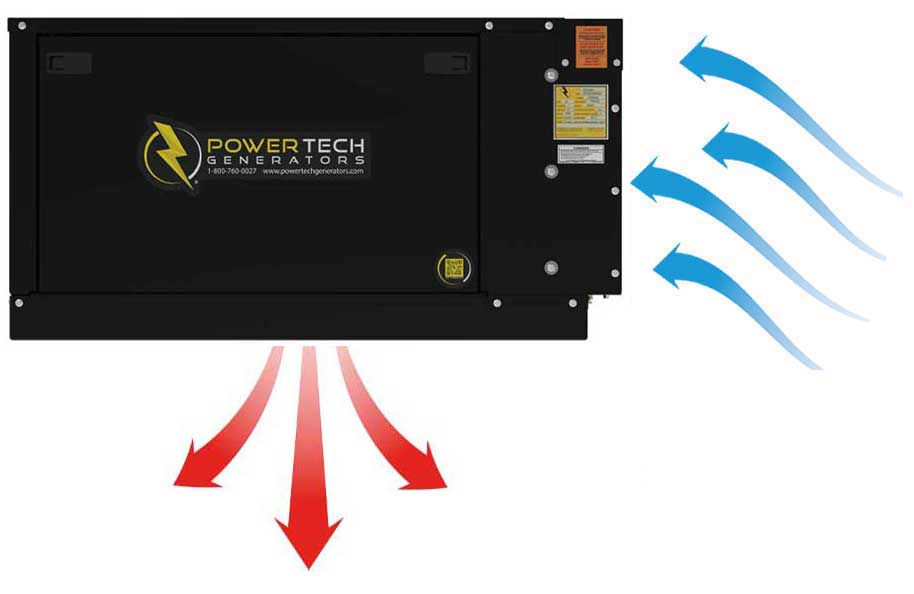
The PTK-12-MIL-HI generator, tailored specifically to meet the power requirements of military operations, notably within the compact confines of the S-788 Humvee-mounted shelter.

The PTK-10-TRAP generator was designed to meet the unique challenges posed by the cramped confines of military scout vehicles.

Focused on portability, quick assembly, and ease of use, this project highlights the importance of responsive solutions in emergency situations.
Whether a generator is powering a mobile medical unit, command center, food truck, telecommunications vehicle, luxury motor coach, or mobile marketing vehicle, the sound it produces can affect operators, passengers, customers, patients, and anyone working nearby.
Generator specifications often include a noise rating expressed in dBA. Although this number can help buyers compare equipment, it does not tell the entire story. The distance from the generator, electrical load, installation design, exhaust system, enclosure, cooling airflow, vibration control, and surrounding environment can all influence how loud a generator sounds after it is installed.
Understanding dBA ratings and the conditions under which they are measured can help specialty vehicle manufacturers and equipment owners make better decisions when selecting and installing a mobile generator.
The abbreviation dBA stands for A-weighted decibels. Decibels measure sound pressure, while the A-weighting adjusts the measurement to better represent how the human ear responds to different sound frequencies.
Human hearing is not equally sensitive to every frequency. People generally hear certain middle and higher frequencies more easily than very low frequencies. Weighted measurements reduce the influence of frequencies that are less noticeable to the human ear, providing a useful way to evaluate how loud equipment may sound to nearby people.
This makes dBA one of the most commonly used measurements for generator noise, workplace noise, vehicle equipment, HVAC systems, and other machinery. However, a dBA rating should always be reviewed along with the testing distance and operating conditions.
The decibel scale is logarithmic rather than linear. This means that a generator rated at 80 dBA does not produce only slightly more sound energy than one rated at 70 dBA. A 10 dBA increase represents approximately ten times as much sound energy and is often perceived by listeners as roughly twice as loud, although human perception varies.
Even a smaller numerical difference can be meaningful. An increase of approximately 3 dBA represents a doubling of sound energy. That does not necessarily mean the sound will be perceived as twice as loud, but it does demonstrate why a few decibels can make a noticeable difference when comparing generators.
Because the scale is logarithmic, dBA values should not be treated like ordinary linear measurements. A difference that appears small on a specification sheet may have a significant effect on the sound environment around a specialty vehicle.

A generator noise rating is only useful when the measurement distance is provided. Sound levels decrease as the listener moves farther away from the source. Under ideal open field conditions, doubling the distance from a sound source can reduce the measured sound pressure level by approximately 6 dBA.
For example, a generator measured at 70 dBA from 23 feet cannot be directly compared with another generator measured at 70 dBA from 3 feet. Although the published numbers are identical, the second generator would generally be producing considerably less sound at the source because it reached the same measurement at a much shorter distance.
When reviewing generator noise specifications, buyers should determine whether the reading was taken at 3 feet, 7 meters, or another distance. They should also check whether the measurement was taken from one side of the generator or represents several readings around the unit.
A generator may produce different sound levels at the radiator side, exhaust side, service side, and control panel side. A single published number may not fully describe how sound travels around the generator after installation.
Generator noise can change as the electrical load increases. When more power is required, the engine and cooling system must work harder. Combustion noise, fan noise, airflow, and exhaust sound may become more noticeable under higher loads.
For this reason, a noise rating recorded with the generator operating at no load may not accurately represent how it will sound while powering air conditioners, medical equipment, kitchen appliances, communications systems, lighting, pumps, compressors, or other equipment inside a specialty vehicle.
Buyers should determine whether the published dBA rating was measured at no load, partial load, or full rated load. Comparing generators under different load conditions can produce a misleading result. A meaningful comparison requires similar testing distances, electrical loads, engine speeds, measurement methods, and environmental conditions.

Open generators provide direct access to the engine, alternator, cooling system, filters, belts, and service components. This configuration can simplify installation and maintenance, particularly when the specialty vehicle already includes a properly designed generator compartment.
However, an open generator does not include a complete sound attenuating enclosure around the unit. The final noise level will depend heavily on the construction of the vehicle compartment, the location of air openings, the exhaust system, the mounting method, and the materials used to control sound.
An enclosed generator includes a housing designed to reduce the amount of sound transmitted to the surrounding environment. A properly engineered enclosure may use insulated panels, internal barriers, controlled airflow paths, acoustic materials, and sealed access points to reduce engine and mechanical noise.
Enclosures must still provide adequate cooling airflow and service access. Simply surrounding a generator with solid panels can trap heat, restrict combustion air, create cooling problems, and increase the risk of exhaust recirculation. Effective sound control requires balancing noise reduction with ventilation, cooling, maintenance access, and safe exhaust routing.
Engine speed can affect the sound characteristics of a generator. PowerTech diesel generators are designed around long life 1800 RPM operation for demanding mobile applications. Lower engine speed can contribute to a deeper and less intrusive sound profile than equipment operating at higher speeds, although the final noise level depends on the complete generator and installation design.
Noise is not determined by engine RPM alone. Engine size, number of cylinders, combustion characteristics, fan design, exhaust routing, alternator design, enclosure construction, mounting system, and electrical load all contribute to the sound produced by a generator.
Two generators operating at the same engine speed may have very different sound characteristics. Buyers should evaluate the complete system rather than relying on RPM as the only indicator of quiet operation.
Generator specifications may refer to sound pressure level or sound power level. These terms are related, but they are not interchangeable.
Sound power describes the total acoustic energy produced by a sound source. It is a characteristic of the equipment itself and is generally expressed as a sound power level. Sound pressure describes the sound measured at a particular location and is affected by distance, nearby surfaces, walls, barriers, and the surrounding environment.
Most people evaluating a generator are concerned with sound pressure because it reflects what an operator, passenger, customer, or nearby worker may hear at a specified distance. However, the measurement conditions must be included for the rating to be useful.
A sound power rating should not be directly compared with a sound pressure rating. Before comparing published specifications, confirm that both manufacturers are reporting the same type of measurement.
The same generator can sound very different in two separate vehicles. Installation design influences how sound, airflow, exhaust noise, and vibration move through the vehicle structure.
A generator installed near a passenger compartment may require a different sound control strategy than one installed beneath a telecommunications trailer or at the rear of a mobile command center. Compartments with large ventilation openings can allow engine and fan noise to escape directly. Hard metal surfaces may reflect sound, while poorly supported panels can vibrate and amplify certain frequencies.
The compartment should be designed with the complete power system in mind. Generator placement, air intake, radiator discharge, exhaust routing, service access, fuel connections, electrical wiring, and sound control materials must work together. Noise reduction should not interfere with cooling or make routine maintenance unnecessarily difficult.
PowerTech works with specialty vehicle manufacturers to evaluate these installation requirements before the generator is placed into production. This application specific approach allows the generator and vehicle compartment to be designed around the available space, expected load, operating environment, and acceptable noise level.
Not all generator noise travels through the air. Mechanical vibration can transfer through the generator base and into the vehicle frame, compartment panels, floors, cabinets, and interior surfaces. These components can then act like speakers by radiating structure borne noise throughout the vehicle.
A generator may have a reasonable dBA rating when tested independently but create an unpleasant interior sound if vibration is transmitted into the vehicle structure. Occupants may hear buzzing, rattling, humming, or low frequency resonance even when the exterior sound level appears acceptable.
A properly designed vibration isolation system helps separate the generator from the vehicle structure. PowerTech’s four point mounting approach is designed to help control vibration while providing stable support for mobile applications. Mount selection, generator weight, center of gravity, installation angle, vehicle movement, and frame stiffness should all be considered during the integration process.
Loose panels, unsupported exhaust components, rigid connections, and metal to metal contact can reduce the effectiveness of the mounting system. The complete installation should be inspected for potential vibration paths rather than relying only on the generator mounts.
The exhaust system can be a significant source of generator noise. Muffler selection, pipe diameter, pipe length, routing, outlet direction, mounting, and the number of bends can affect both sound and engine performance.
A properly designed exhaust system should direct fumes safely away from doors, windows, air intakes, work areas, and occupied spaces. It should also allow for thermal expansion and vibration without placing excessive stress on the engine or exhaust components.
Exhaust modifications should not create excessive backpressure. Adding restrictive components solely to reduce noise can affect performance, increase exhaust temperatures, and create engine problems. Mufflers and exhaust components should be selected for the specific engine and application.
The outlet location also influences how the generator is perceived. An exhaust outlet directed toward a work area, neighboring vehicle, customer line, or seating area may make the generator seem louder and more disruptive even if the measured dBA level has not changed significantly.
A generator produces heat that must be removed from the engine, alternator, radiator, and compartment. Cooling fans and moving air can contribute significantly to the overall sound level, particularly when the generator operates under a substantial electrical load or in hot weather.
Reducing an air opening to control noise can also restrict cooling. If heated discharge air recirculates into the compartment, the generator may operate at higher temperatures or shut down. The resulting airflow turbulence may also produce additional noise.
A better approach is to design airflow paths that reduce direct sound transmission while maintaining the required volume of cooling air. Depending on the application, this may involve baffled openings, lined ductwork, remote radiator configurations, properly positioned louvers, or other engineered solutions.
Any change to the airflow system should be evaluated for pressure drop, heat rejection, ambient temperature, and service access. Sound reduction should never compromise the generator’s ability to operate safely at its rated load.

A quiet installation begins with selecting a generator that matches the vehicle’s power requirements. An oversized generator may add unnecessary weight, cost, and sound, while an undersized unit may operate near its maximum capacity for long periods and experience performance problems.
The location of the generator should be considered early in the vehicle design process. Greater separation from occupied spaces can help, but distance alone may not solve structure borne vibration or exhaust noise. The direction of the radiator, exhaust outlet, ventilation openings, and service access points can all influence where sound travels.
Sound attenuating materials may be used inside a generator compartment when they are suitable for the temperature, airflow, fuel, oil, moisture, and fire safety requirements of the application. Materials should be securely installed and should not interfere with moving components, filters, service points, or ventilation openings.
The best results typically come from treating the generator, compartment, mounting system, exhaust system, and cooling system as one integrated design.
When comparing generator models, begin by confirming that the ratings were collected under comparable conditions. Look for the measurement distance, load level, engine speed, sound pressure or sound power designation, enclosure configuration, and test environment.
A lower dBA number does not automatically mean one generator will be quieter in the completed vehicle. A rating measured from farther away, at a lighter load, or under different environmental conditions may create the appearance of better performance without representing a true comparison.
Ask how the generator will be installed and what noise sources will remain after installation. An enclosed generator may provide better sound attenuation, but an open generator installed inside a carefully engineered compartment may also achieve an effective result. The correct choice depends on the vehicle design, operating environment, service requirements, and noise expectations.
Generator noise is not only a comfort issue. Prolonged exposure to high sound levels can contribute to hearing damage. The amount of risk depends on both the noise level and the duration of exposure.
The Occupational Safety and Health Administration identifies an 8 hour time weighted average of 85 dBA as the action level for occupational hearing conservation requirements in general industry. This does not mean that every generator rated near 85 dBA automatically creates the same exposure. Actual exposure depends on distance, operating time, installation, barriers, other nearby equipment, and how long a person remains in the area.
Employers and vehicle operators should evaluate the actual sound environment where the equipment is used. If personnel may be exposed to elevated noise levels, appropriate measurements, engineering controls, work practices, and hearing protection may be necessary.
A generator specification is useful for equipment selection, but it is not a substitute for measuring workplace noise after the complete system is installed and operating.
Noise expectations should be identified during the initial vehicle design process. A mobile medical unit serving patients may have different requirements than an emergency communications trailer operating in a remote location. A food truck serving customers in a crowded event space may require a different solution than a mobile workshop operating at an industrial facility.
PowerTech Generators offers open and enclosed gas and diesel generator configurations for specialty vehicles. Custom options may include sound attenuating enclosures, vibration isolation, remote radiator arrangements, exhaust solutions, control configurations, and installation designs developed around the vehicle’s available space.
By evaluating electrical demand, duty cycle, compartment dimensions, airflow, service access, exhaust routing, and acceptable sound levels together, PowerTech can help OEMs develop a mobile power system that supports both reliable operation and operator comfort.
There is no single dBA rating that is appropriate for every generator or application. The acceptable level depends on the measurement distance, electrical load, operating environment, vehicle design, and proximity to occupants or workers. A rating should always be reviewed with its testing conditions.
A lower rating generally indicates less measured sound under the stated conditions, but ratings are only comparable when the generators were tested at similar distances, loads, speeds, and environments. A low number measured at a greater distance or lighter load may not represent a quieter generator.
A 10 dBA increase represents approximately ten times as much sound energy and is often perceived as roughly twice as loud. Perceived loudness can vary depending on sound frequency, duration, surroundings, and the individual listener.
Under ideal open field conditions, doubling the distance from a sound source can reduce the measured sound pressure level by approximately 6 dBA. Walls, vehicles, buildings, reflective surfaces, and other obstacles can change the real world result.
Yes. Generator noise may increase as electrical load increases because the engine, cooling fan, airflow system, and exhaust system are working harder. Buyers should determine whether a published noise rating was measured at no load, partial load, or full load.
An 1800 RPM diesel generator may have a lower frequency and less intrusive sound profile than higher speed equipment, but engine speed is only one factor. Engine design, cooling fans, exhaust, enclosure, mounting, load, and installation quality also influence noise.
Improperly installed sound barriers can restrict airflow and trap heat. A generator compartment should never be sealed or insulated without accounting for combustion air, cooling airflow, radiator discharge, heat rejection, exhaust routing, and material safety.
Mechanical vibration may travel through the generator mounts and vehicle structure. Floors, walls, cabinets, and panels can amplify buzzing, rattling, humming, or low frequency noise. Proper vibration isolation and installation design can help reduce this structure borne sound.
A smartphone app may help identify general sound level changes, but it may not provide the accuracy or calibration required for equipment certification, specification verification, or occupational noise assessment. Professional measurements should use properly selected and calibrated sound level instruments.
Measurements may be taken at several positions around the generator, at operator locations, inside occupied areas, or at a specified distance from the vehicle. The correct locations depend on the purpose of the test. The distance, generator load, measurement instrument, surroundings, and operating conditions should be documented.
Noise may be reduced through proper generator sizing, sound attenuating enclosures, vibration isolation, exhaust system design, airflow management, compartment treatment, and strategic placement. Any modification must preserve cooling, service access, structural support, and safe exhaust operation.
A generator’s dBA rating is an important specification, but it should not be evaluated by itself. Distance, electrical load, engine speed, enclosure design, vibration, exhaust routing, airflow, and vehicle construction all affect how the generator will sound in actual operation.
PowerTech Generators works with specialty vehicle manufacturers and equipment owners to develop gas and diesel generator systems around real application requirements. Whether the priority is quiet operation, compact installation, service access, extended runtime, or dependable prime power, PowerTech can help identify a configuration that fits the vehicle and its mission.
Contact PowerTech Generators to discuss your electrical load, installation space, operating environment, and noise requirements.